Getting started
Running a monthly review
More sources and clients
How the numbers work
Finding the customers behind a figure
Open any movement to see exactly who is in it.
Select a movement on the waterfall, such as Lost, or ask in the conversation, for example Who stopped paying in August?
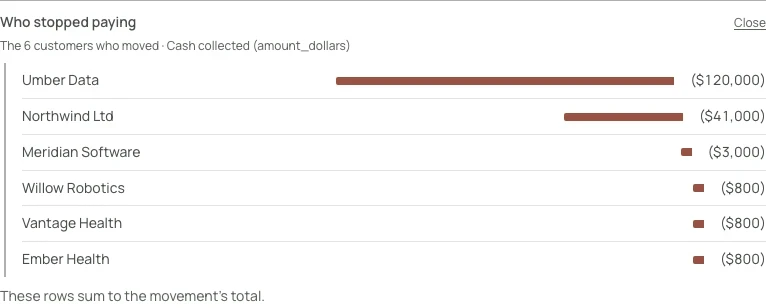
What the list shows
New | Who paid for the first time. |
Returned | Who resumed paying after a gap. |
Growth | Who paid more than last month, with the before and after amounts. |
Contraction | Who paid less than last month, with the before and after amounts. |
Lost | Who stopped paying, and what each had been paying. |
Starting and Ending are balances rather than movements, so they do not open into a list.
Each list says what it measures in a line above the names. When the amounts add up to the movement, the list says These rows sum to the movement's total. If they do not, it says so, so a partial list is never presented as complete.
On a month reported as normalized recurring revenue, the list shows each customer's share of the movement by default. The amounts as billed are one tap away.
What to do with the list
Two follow-ups are offered under the list:
What do they have in common? Plan, segment or anything else the customers share.
How does this compare to last period? Whether this is an unusual month or part of a pattern.
Start with a customer you know. If Morevy has their payments right, you have a reason to trust the rest of the list.